






Minimum Viable Product (MVP) development helps businesses to determine their product’s future in market cost-effectively and increase success rate. Learn How?



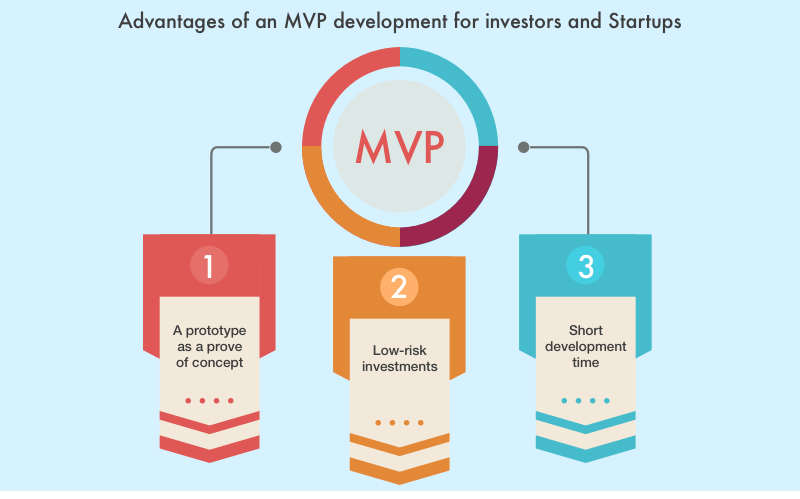
In a simple phrase, an MVP meaning is a product, which includes minimum features, or one main feature.
Well, there are lots of reasons, and the main is that customers can start using it before the overall product appears.
Thus, a user gets acquainted with the idea or concept of the future, more complex product and even can influence on its development.
In such a way, the product owner can create an app, which satisfies his and customers' requirements.
Yet, lots of startupers are prejudiced against such development method.
They are frightened that they won't be able to show the overall idea with an MVP model.
Why do you need a minimum viable product?
Every new business is born out of chaos. Three-quarters of enterprises do not go past the initial stage, which is also the most decisive one. Whether you survive or go under depends on how well you steer through the troubled waters of startup. And that’s exactly where a minimum viable product (MVP) may be your beacon.

The whole startup world has become inspired by the idea of building Minimum Viable Products (MVPs) after Eric Ries popularised it back in 2008. It has become a trendy word in the tech world gradually turning into a misleading concept.
As a result, we have companies that are not willing to use the MVP approach as they don’t 100% understand it, experts who state the concept is wrong and clients who often get hot under the collar after the suggestion to try out a minimum viable product.
Сonsidering the fact that MVP remains one of the most important components when creating software, it would be unreasonable to drop it just because some people misuse the concept.
Let’s talk about why this lean tool becomes confusing, what mistakes you should avoid and, more to the point, what is the right way to build an MVP.