

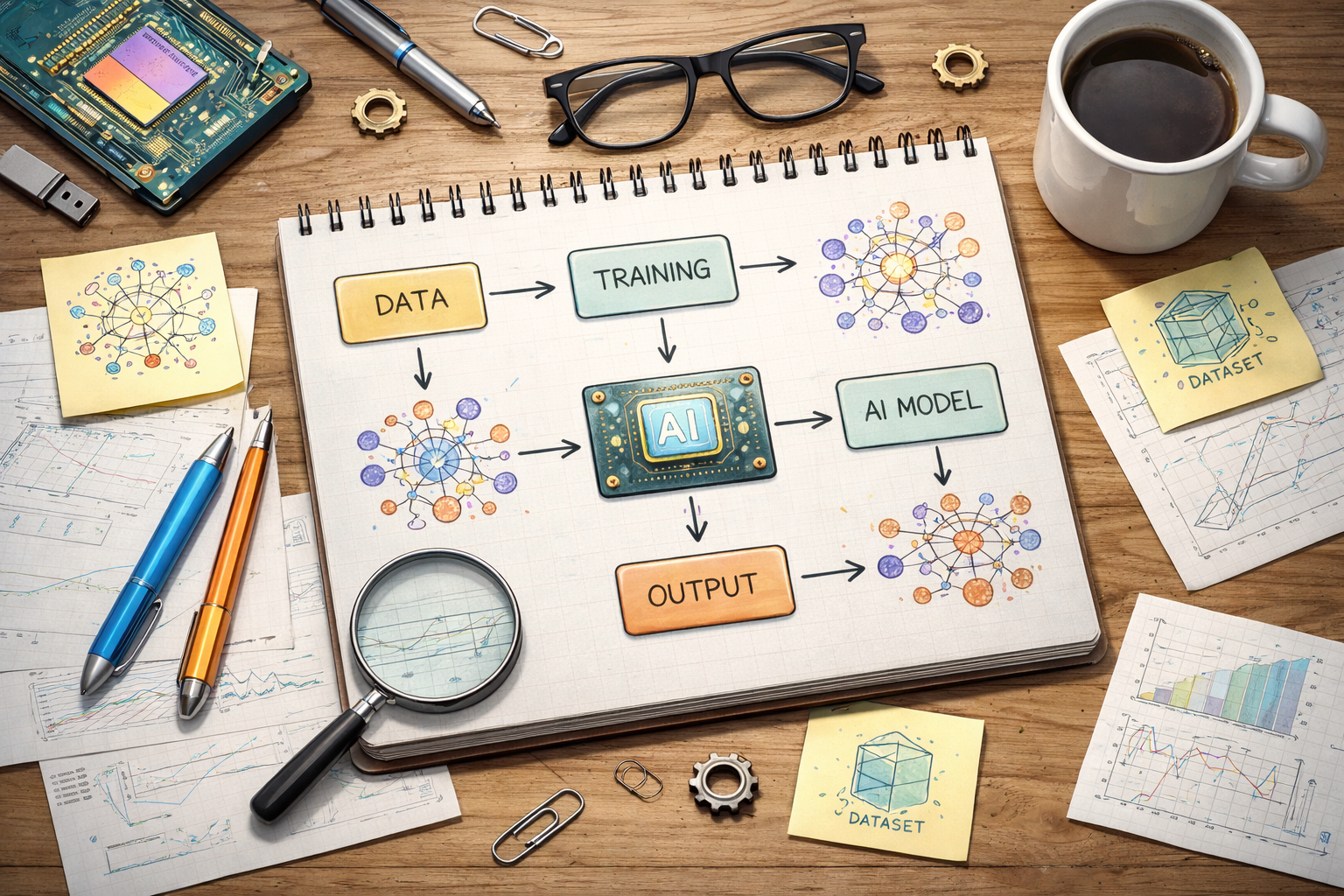
The development and application of Generative AI (Gen AI) have moved far beyond research labs into real-world business environments. Today, companies use Gen AI to automate customer support, generate creative content, and enhance productivity. Many of these capabilities are delivered through custom generative AI development services designed to address specific business challenges.
At the same time, implementing Gen AI is a strategic investment that requires careful cost planning. For business owners, understanding the cost of adopting a Gen AI–powered system or service is not straightforward, as expenses vary widely depending on technology choices, data requirements, infrastructure, and customization level. In this article, we break down the key cost components of implementing Generative AI so you can better prepare for deploying a solution that aligns with your business goals.
Understanding What “Implementation” Means
When planning a generative AI initiative, the first decision is the development approach. This choice largely depends on your goals, data availability, and resource constraints.
Training a model from scratch means building an AI system using raw data and custom architectures. This approach is typically chosen for cutting-edge research or highly specialized, proprietary domains where existing models cannot meet strict requirements.
Fine-tuning a prebuilt model involves adapting an existing foundation model with your own domain-specific data. It is a popular option for businesses that need tailored AI capabilities while avoiding the high costs and complexity of full model training.
Using hosted APIs relies on third-party AI services to access ready-made generative models. This approach enables rapid deployment with minimal infrastructure and is well suited for teams that prioritize speed, scalability, and lower upfront investment.
Data Preparation Costs
Data fuels AI. Before any model training or deployment, data must be prepared.
Data Collection
- Public datasets: free to low cost
- Proprietary data licensing: variable fees (thousands to millions)
- Manual collection and annotation: expensive
Cleaning & Labeling
- Manual data labeling: costly ($2–$15 per annotation, depending on complexity)
- Tool-assisted cleaning and pipelines: setup cost plus running costs
- Specialized labeling (images, semantic categories): premium pricing
Estimate: Small projects may spend $5k–$50k; enterprise data pipelines can exceed $500k.
Model Training Costs
Training from Scratch
Training state-of-the-art models (e.g., large language models) is very expensive:
- Compute resources: GPUs / TPUs rented by the hour
- Energy costs: data center expenses
- Engineering time: expert AI engineers
Industry cases have reported training costs ranging from $1M to $10M+. These figures reflect the scale used by major tech companies.
Fine-Tuning Existing Models
Using a base model (like GPT, LLaMA, Claude, etc.) drastically reduces costs.
- Fine-tuning budgets often range from $10k–$500k
- Cost depends on:
- Model size (7B vs. 70B+ parameters)
- Training duration
- Number of training samples
Fine-tuning can benefit from cloud credits and optimized pipelines to reduce expenses.
Using Hosted AI APIs
This is often the fastest, cheapest path:
- Pay per token (text) or per image generated
- No hardware, storage, or model training costs
- Integration and usage scale determine cost
Typical Example: $0.001–$0.10 per 1,000 tokens, depending on provider and model tier.
Best for MVPs and early proofs of concept.
Infrastructure & Cloud Costs
Deploying your own generative AI models or running custom training and inference jobs comes with significant infrastructure expenses. The largest share of costs typically comes from compute resources, including GPU hours for model training and CPU instances for preprocessing and inference workloads.
Storage is another major factor, as generative AI systems require space for large datasets, model checkpoints, and logs. Networking costs also add up, especially when transferring large volumes of data between services, regions, or external systems.
In addition, orchestration tools such as Kubernetes and workflow management platforms introduce operational overhead, including setup, monitoring, and maintenance efforts.
While major cloud providers like AWS, Google Cloud, and Microsoft Azure may offer reserved capacity or committed-use discounts, infrastructure expenses can still scale quickly. For production-grade systems, monthly cloud costs often range from $10,000 to well over $100,000 as usage and model complexity grow.
Development & Engineering Expenses
Implementing Gen AI isn’t just computation—it’s engineering:
- AI/ML engineers
- DevOps and MLOps
- Frontend/Backend developers
- Product & UX specialists
Annual salaries or contractor fees can be significant:
- Mid-level AI/ML engineer: $120k–$200k/year
- Senior AI engineers: $200k+ per year
For short projects, contractors may cost $50k–$200k+ depending on complexity.
Deployment & Integration Costs
Gen AI must integrate with existing systems:
- APIs and backend services
- Authentication and security
- Monitoring and logging
- Performance tuning
These tasks typically demand additional engineering hours, adding to total cost.
Ongoing Maintenance & Support
After launch, you’ll need:
- Model updates and retraining
- Monitoring for bias, drift, performance degradation
- Security and compliance
- Usage cost for hosted APIs
Annual maintenance budgets often run 20–30% of initial development costs.
Licensing & Regulatory Costs
In regulated industries (finance, health, legal), you may incur:
- Third-party compliance audits
- Storage and privacy requirements
- Legal review of AI usage
These can add tens of thousands to hundreds of thousands annually.
Total Cost Benchmarks
The overall cost of a generative AI initiative varies significantly depending on the chosen implementation path.
A hosted API–based MVP is usually the most affordable option, with typical first-year costs ranging from $5,000 to $50,000. This approach is well suited for validating ideas quickly without heavy infrastructure investments.
Fine-tuning an existing model represents a mid-range investment. In most cases, organizations can expect first-year costs between $50,000 and $500,000, depending on data volume, customization depth, and usage intensity.
Building an enterprise-grade custom model requires substantially higher resources. Development, infrastructure, and operational expenses often place first-year costs in the $500,000 to $5 million range.
At the high end, research-scale model training involves massive datasets, extended GPU usage, and specialized teams. Costs for such initiatives typically start around $1 million and can exceed $10 million.
Ways to Reduce Costs
To control expenses:
- Start with hosted APIs
- Use open-source models
- Outsource specialized work strategically
- Automate data pipelines
- Monitor usage and scale efficiently
Final thoughts
When implementing a generative artificial intelligence (AI) model, organisations will incur a variety of costs, including: The initial costs will be incurred by acquiring data and operating equipment, creating and maintaining the infrastructure to support them, and obtaining other specialised skills required to deploy generative AI.
For smaller projects, fine-tuning on Hosted APIs provides the greatest cost savings; conversely, for larger enterprise systems, custom model development provides the greatest gains in efficiency, performance, and competitive edge—but generally comes with significantly higher costs. When an organisation has established a strategy and properly allocates resources to implementing Generative AI, it is likely to avoid financial surprises.